


operate to innovate
FLEXIA Project
Local FLExibility services enabled by interoperable digital platforms X Aggregated Industries
As a result of energy transition and decarbonisation policies promoted at national and European level, the need for energy flexibility in Europe is set to grow dramatically. The FLEXIA project (acronym for: local FLEssibility services enabled by interoperable digital platforms X Aggregated Industries) was created to meet this need, exploiting the untapped potential of the industrial sector by promoting collaboration between six Italian partners who bring digital, engineering and scientific expertise to the table.
The daily demand for energy flexibility in Europe is set to increase, with an estimated growth of 133% by 2030 and up to 250% by 2050. In this context, demand-side flexibility (DSF), particularly industrial demand-side flexibility (iDSF), represents a low marginal cost resource that is still largely untapped, despite the industrial sector being the third largest energy consumer in the EU. The implementation of iDSF could reduce peak load by between 4.7% and 7.1%, contributing to the stability of the energy system, but its development is currently hampered by economic, regulatory, technological and organisational barriers.
In this context, FLEXIA aims to support the aggregation of different Energy Management Systems (EMSs) with the goal of optimising the flexibility of collaborative demand from industries in close physical proximity.
The FLEXIA Knowledge Hub will serve as a single point of reference for a wide range of information and resources, including FLEXIA-Assistant, an innovative approach to assessing the flexibility potential of industries and performing an initial validation of their accessibility in different flexibility markets, using a standardised metric. Finally, the reliability of energy distribution increasingly depends on the cybersecurity of the physical and digital infrastructure used. Consequently, a robust cybersecurity posture is essential, not only for the resilience of energy distribution systems, but also to ensure compliance with European regulations, such as European Directive 2022/2555 (NIS2).
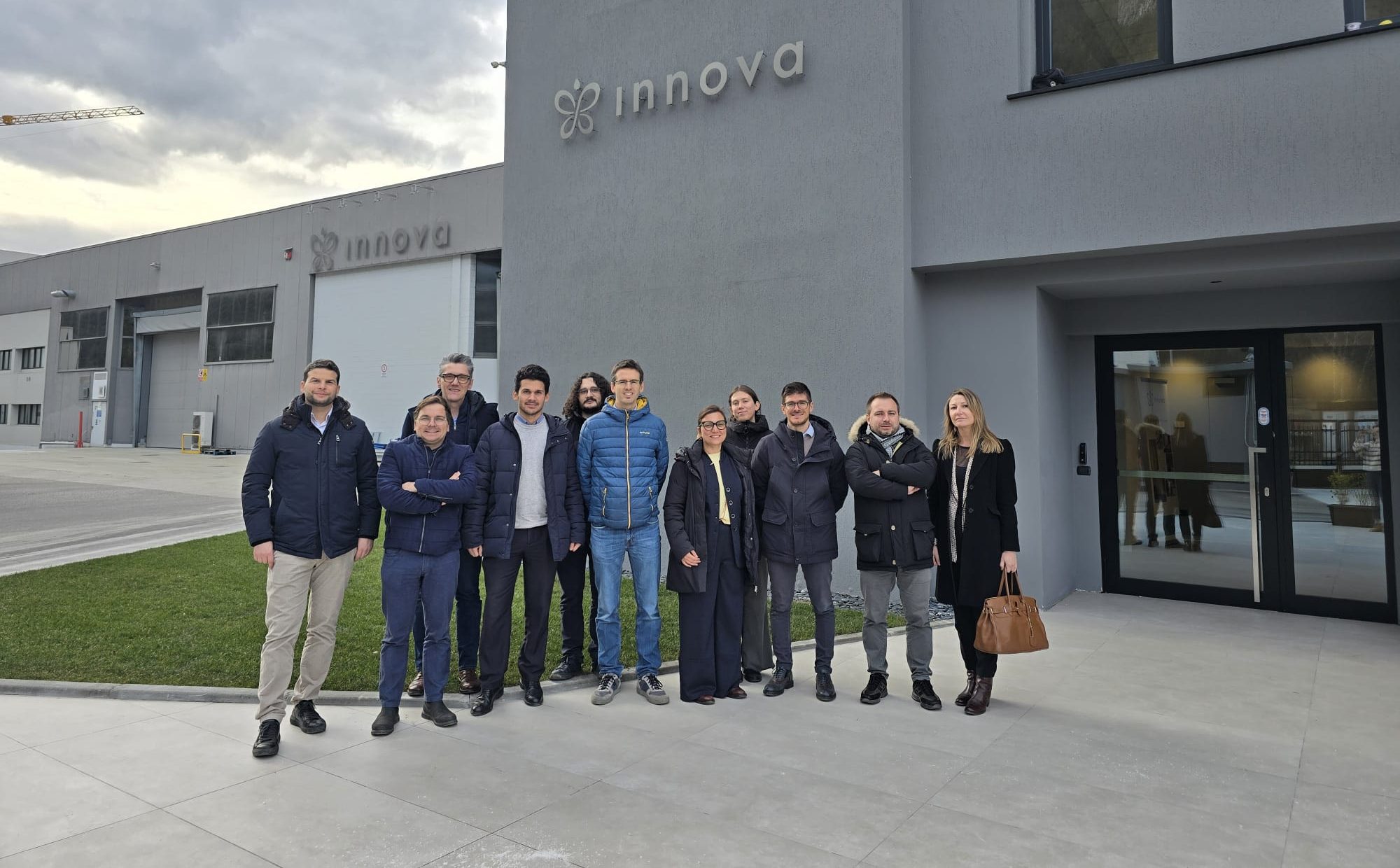
FLEXIA solutions will be analysed and supported at a pilot site in Storo (Province of Trento, Italy), in a collaboration between EMS developers, DSOs, industries and research centres (in the energy and digital sectors), laying the foundations for the future use of aggregated industrial EMSs for local grid flexibility services.
The role of Maps Group in FLEXIA
As project coordinator, Maps S.p.A. is responsible for the development of the FLEXIA technology platform: a modular software solution for aggregation, analysis and control designed for Balancing Service Providers (BSPs), that is, operators tasked with delivering balancing services to ensure the stability and security of the electricity grid.
By integrating its proprietary solution and leveraging Artificial Intelligence algorithms, Maps Group securely enables the interoperability required to manage pools of distributed resources, thereby optimising BSP participation in energy markets through automated processes.
This digital architecture transforms industrial sites into active participants in the energy system, enabling precise modulation of energy loads to respond swiftly and effectively to national grid dispatching requirements.
More information about the project
| Project Acronym | FLEXIA |
|---|---|
| Full title | Servizi di FLEssibilità locali abilitati da piattaforme digitali interoperabili X Industrie Aggregate (eng. Local FLExibility services enabled by interoperable digital platforms X Aggregated Industries) |
| Funding programme |
MASE – Italian Ministry of the Environment and Energy Security Strategic area: Data and network digitalisation Topic: Interoperable digital platforms |
| Project Coordinator | Maps S.p.A. |
| Project start date | 01st October 2025 |
| Duration | 15 months |
| Project code | MI_DDR_00210 |

Consortium
FLEXIA is developed by a multidisciplinary consortium of six Italian partners.
PROJECT COORDINATOR
- Maps S.p.A.
Partners
- Consorzio Elettrico di Storo, Società Cooperativa (CEDIS)
- Fondazione Bruno Kessler con i Centri Sustainable Energy e Cybersecurity
- HYDROALP S.r.l.
- INNOVA Group S.r.l.
- RINA Consulting S.p.A.